






Keynote Address by Ambassador Sohail Mahmood
DG, Institute of Strategic Studies Islamabad (ISSI)
01 December 2025
BOOK LAUNCH: SOUTH ASIA MARITIME SECURITY PARADIGM
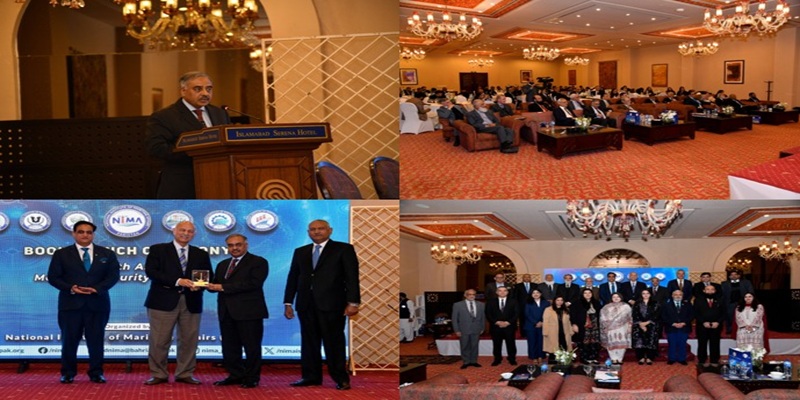
Honourable Senator Mushahid Hussain Sayed,
Former Chief of Naval Staff Admiral Abdul Aziz Mirza,
Vice Admiral Dr Ahmed Saeed, Rear Admiral Javaid Iqbal, Esteemed speakers, Distinguished participants,
Assalam o Alaikum and a very Good Morning
I am deeply privileged to speak to this august gathering on the launch of “South Asia Maritime Security Paradigm”, a publication delving into questions fundamental to Pakistan’s future trajectory and South Asia’s collective destiny.
Let me begin with a proposition that should be self-evident, yet remains insufficiently internalised across our strategic community: the 21st century’s defining geopolitical competitions will be predominantly maritime. This is not speculation. It is an evaluation based on empirical evidence of ongoing power shifts, economic restructuring, and strategic reorientation by major and middle powers worldwide.
Allow me to illustrate why this matters strategically and systemically, why maritime affairs demand greater attention, and why the analyses contained in this volume should inform actual policy decisions rather than fade into oblivion deemed as yet another academic exercise.
First, the global balance of power is shifting decisively seaward. For decades following the end of the British Raj in the Sub-Continent, South Asian strategic discourse centred understandably on land borders, unresolved political and territorial disputes, and continental military balances. This orientation made eminent sense. The Partition’s trauma, subsequent armed conflicts and Indo-Pakistan wars, the intractable Jammu and Kashmir dispute, and instability in Afghanistan — all these continental concerns demanded persistent attention and dedicated resources. Pakistan’s strategic culture also evolved accordingly, prioritising continental defence concepts, and territorial integrity essentially against land-based threats.
But the 21st century’s defining power competitions are playing out primarily in maritime domains. China’s naval modernization and transformation from a coastal defence force to blue-water navy capable of sustained global presence, is reflective of a clear understanding of the shifting paradigm. The U.S. strategy has pivoted toward the so-called ‘Indo-Pacific,’ with freedom of navigation operations, alliance reinforcement, and forward naval presence signalling an enduring commitment despite engagements across the Atlantic and in the Middle East. India’s blue-water aspirations, manifested in aircraft carrier development, submarine programs, and an expanding regional presence from East Africa to Southeast Asia, aim to establish maritime dominance throughout the Indian Ocean Region.
These shifts fundamentally reshape regional power dynamics in ways land-centric strategic frameworks cannot optimally capture. Naval presence enables coercion without territorial conquest. Maritime chokepoint control provides economic leverage without military occupation. Port access agreements establish strategic footholds without the political complications of formal basing agreements. Pakistan cannot afford strategic thinking anchored in yesterday’s realities while tomorrow’s competitions unfold in domains we do not adequately appreciate.
Second, economic futures depend fundamentally on maritime access and maritime security. This point requires emphasis, given how policy discussions often treat economics and security as separate portfolios managed by different ministries with limited coordination.
South Asia’s development trajectory, lifting hundreds of millions out of poverty, integrating into global value chains, accessing energy supplies powering industrialisation, and achieving food security for growing populations, requires secure, efficient, and affordable maritime connectivity. Consider Pakistan specifically: Gwadar’s transformation from a fishing village to a deep-sea port, CPEC’s operationalisation linking western China to the Arabian Sea, and the development of the Africa trade corridor, opening new markets. These are not merely infrastructure projects managed by port authorities. They are economic lifelines determining whether Pakistan achieves middle-income status or remains trapped in low productivity.
Yet, this maritime infrastructure remains vulnerable to multiple disruption vectors: naval blockades during crises; piracy and maritime crime affecting insurance and freight costs, and investor confidence; cyber attacks on port logistics that can paralyse operations; climate impacts, flooding coastal facilities; and major-power competition that could restrict access during times of heightened tensions. Economic planning divorced from maritime security assessment is planning for failure. Nowhere can the Finance ministries and Planning Commissions adequately fulfil their mandates, insulated from the naval headquarters and maritime security agencies.
Third, threat landscapes have evolved far beyond traditional frameworks that still organise much institutional thinking. True, conventional naval competition, such as fleet sizes, submarine capabilities, anti-ship missiles, sea denial strategies, etc, matters. But contemporary maritime security encompasses much more.
Cyber vulnerabilities threaten port operations that modern economies depend on. Sea-level rise inundates coastal cities, extreme weather destroys port infrastructure, ocean warming disrupts fisheries feeding millions, and ecosystem collapse forces migration. Illegal, unreported, and unregulated fishing depletes protein sources for impoverished coastal populations while organised crime networks profit. Maritime terrorism targets energy infrastructure, threatening supply chains. Technological disruption — from autonomous vessels to satellite surveillance to Artificial Intelligence — renders traditional capabilities potentially obsolescent while creating new operational possibilities.
Fourth, existing governance frameworks lag dangerously behind contemporary challenges. UNCLOS provides essential legal foundations defining territorial waters, exclusive economic zones, and navigation rights. But it cannot resolve sovereignty disputes, manage climate-induced migration, regulate emerging technologies, or coordinate responses to transnational threats.
Regional and sub-regional organisations can and do deliver valuable avenues for collaboration. IORA aims to facilitate trade and investment dialogue, BIMSTEC seeks to address Bay of Bengal concerns, and bilateral mechanisms endeavour to manage specific issues. But they systematically avoid complex security coordination precisely where coordination is most needed. The result? Critical gaps between the governance challenges we face and the governance capabilities we possess.
Notably, bilateral arrangements proliferate: Pakistan-China on CPEC security; Pakistan-U.S. on counter-terrorism cooperation; Pakistan-Gulf states on energy security. These platforms do help address important specific concerns. But we also require strategic coherence and systematic coordination. What is needed are inclusive multilateral frameworks balancing diverse interests while addressing shared challenges.
Fifth, theoretical debates carry profound practical consequences often unrecognised in policy communities. Will South Asia’s maritime domain become an arena for a civilisational clash, as Huntington’s frameworks predict, driven by religious and cultural fault-lines? Or can historical patterns of trade, cultural exchange, and pragmatic cooperation inform alternative security arrangements?
The publication being launched today engages these theoretical questions seriously, assessing competing frameworks against empirical evidence while acknowledging irreducible uncertainties.
For Pakistan specifically, both significant opportunities and pressing imperatives demand strategic attention and resource allocation.
The opportunities include: leveraging unique geographic position at the intersection of South Asia, Middle East, Central Asia, and increasingly Africa; developing Gwadar and associated infrastructure into genuine regional connectivity hub; expanding maritime trade relationships beyond traditional partners; shaping regional maritime order through diplomatic initiative rather than merely reacting to others’ initiatives; building Blue Economy sectors from fisheries to coastal tourism to offshore energy to deep sea mining; and positioning as responsible maritime stakeholder through contributions to anti-piracy, humanitarian assistance, and environmental protection.
The imperatives include: substantially upgrading naval capabilities proportionate to expanding maritime stakes; enhancing maritime domain awareness through technology and partnerships; building institutional capacity across government agencies managing maritime affairs; integrating maritime considerations systematically into national security doctrine and foreign policy planning; developing indigenous maritime industries reducing dependence on foreign suppliers; addressing climate vulnerability threatening coastal populations and infrastructure; and cultivating maritime-conscious strategic culture across military, policy, and societal levels.
The Institute of Strategic Studies (ISSI) takes pride in supporting this crucial intellectual endeavour. Strategic studies institutions exist precisely to advance understanding, serving national interests and regional stability. Publications like this fulfil that purpose admirably.
I commend NIMA for this outstanding initiative. I also take this opportunity to pay a glowing tribute to the wisdom, sagacity and leadership of Vice Admiral Dr. Ahmad Saeed in spearheading NIMA’s wide-ranging work over the last three years. This book is his crowning achievement. I also extend my best wishes to Rear Admiral Javaid Iqbal for a rewarding term as the next President NIMA.
To conclude, Pakistan’s maritime future depends fundamentally on decisions informed by precisely this kind of sophisticated, multidimensional, evidence-based analysis. May this publication receive the attention it deserves and set the stage for the realignments it intends.
Thank you.