






Remarks by Director General ISSI, Ambassador Sohail Mahmood,
at launch of CPSC Book, Pakistan and China: Connecting at People’s Level, ISSI, 19 September 2025
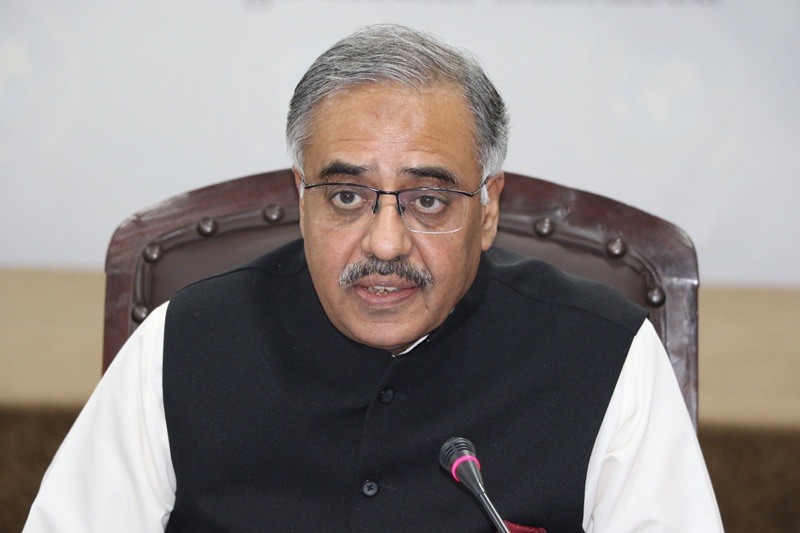
It is a distinct pleasure to welcome everyone to the launch of another ISSI Book, titled Pakistan and China: Connecting at People’s Level. We are delighted to be joined by a galaxy of eminent practitioners and academics with not only deep knowledge and insights about China but also with very distinguished services to the development and steady growth of Pakistan China relations over the past many decades. I take this opportunity to thank them for their invaluable contributions, as we keenly look forward to their enlightening views today.
The leadership of China and Pakistan frequently describes the two countries as good neighbors, good friends, good partners, and good brothers. These are not mere clichés or diplomatic niceties. These terms capture the essence of what the two nations have in common, and what they continue to nurture through common endeavours.
Indeed, the enduing and iron-clad relationship between Pakistan and China remains unique in inter-state relations — characterized as it is by mutual respect, strategic mutual trust, and unwavering mutual support for each other’s issues of core interest. This is a relationship that has not only withstood the vicissitudes of times but has also flourished with immense vigor and vitality. It transcends geo-political interests and remains an important positive factor for peace, stability and development in the region and beyond. Having elevated bilateral relations to the level of All-Weather Strategic Cooperative Partnership, the two sides continue to make solid strides towards building a China-Pakistan Community with a Shared Future.
The present book is a timely endeavour aimed at exploring several facets of this historic and dynamically evolving relationship. It offers a nuanced and multi-dimensional perspective, focusing particularly on areas that are often under-represented in mainstream analyses — namely cultural cooperation, people-to-people exchanges, public diplomacy, and soft power.
The importance of such themes cannot be overstated. In today’s global environment — characterized by complexity, interdependence, and competing narratives — the soft power dimensions of international engagement have assumed profound significance. Increasingly, the strength of bilateral ties is judged not only by strategic alignment or the scale of economic cooperation, but also by the depth of cultural affinity, the frequency of human exchanges, and the robustness of shared values and societal bonds. In this regard, Pakistan-China friendship provides a compelling example of how traditional state-to-state ties can be reinforced and enriched by dynamic and vibrant people-to-people linkages.
Accordingly, the chapters in this volume draw attention to the salient role of educational exchanges, collaborative media productions, the growing popularity of Chinese language and culture in Pakistan, and the reciprocal appreciation for Pakistani traditions among our Chinese friends. They also delve into emerging areas of potential cooperation, such as tourism promotion — including maritime and coastal tourism in Pakistan — and the growing importance of public diplomacy in shaping public opinion and promoting people-to-people ties.
These insights are particularly relevant in the context of China-Pakistan Economic Corridor (CPEC), the flagship project of the Belt and Road Initiative (BRI). While CPEC has played an important part in developing infrastructure and energy projects, it has also contributed to expanding people-to-people exchanges. Through enhanced educational access, professional collaboration, and cross-cultural understanding, CPEC is further facilitating the affinities between Pakistani and Chinese societies.
This Book also underscores the fact that Pakistan-China cooperation is not confined to government-to-government interactions. Rather, it extends across institutions, communities, civil society, academic circles, the business sector, and increasingly, digital platforms. This broad-based engagement is reflective of the foundational strength and adaptability of the relationship — making it more resilient and future-oriented.
In the context of the future, a comprehensive “Action Plan to Foster Closer China-Pakistan Community with a Shared Future in the New Era” has just been adopted. Covering the years 2025-29, the Action Plan includes a distinct chapter on ‘People-to-People Exchanges and Cooperation’ and commits the two sides to deepening exchanges and cooperation in the fields of education, youth, cultural relics, the environment, and between the two peoples. It specifically mentions BRI-linked youth development program, collaboration between cultural institutions, translations of classic works, closer ties in sports, and working together to strengthen the Alliance for Cultural Heritage in Asia.
Next year, Pakistan and China would be crossing another milestone: the 75th anniversary of diplomatic relations. I would reiterate our earlier suggestion that the two sides draw up an elaborate programme of P2P exchanges in Pakistan and China throughout the year to mark this landmark occasion. A special focus must be on youth exchanges to ensure that our next generations are duly apprised of the glorious traditions of Pakistan-China friendship and fully primed take on the baton from hereon. In addition, I would underline deeper collaboration in sports given China’s remarkable prowess in this arena, and in preservation of cultural heritage in Pakistan, given that China now has the second largest number of UNESCO World Heritage sites after Italy. I must underscore that facilitation of visas and enhanced air connectivity would remain crucial in realizing our objectives for deeper P2P exchanges.
I would like to take this opportunity to commend Dr. Talat Shabbir and the CPSC team for conceptualizing this important study and bringing it to fruition. Equally, our deepest thanks are due to the distinguished contributors to this volume, some of whom are either physically here or have joined us on-line. Their insights related to specific fields have truly enriched the discourse.
We at the ISSI hope this volume will serve as a useful resource for students, academics, practitioners, and policymakers interested in understanding the contemporary dynamics of Pakistan-China relations through a social and cultural lens. Hopefully, it will also inspire further research, dialogue, and collaboration to deepen mutual understanding and goodwill. Overall, our aim should continue to be to build not only a strong strategic partnership but also a people-centric relationship rooted in shared history, cultural empathy, and a common vision for the future.
Thank you.