




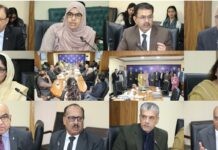
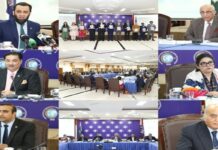
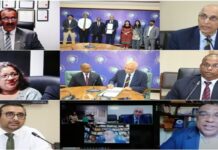
Remarks by Director General ISSI Ambassador Sohail Mahmood at the “Youth Policy Dialogue on Kashmir 2025”, ISSI, 27 October 2025

It is a pleasure to welcome everyone to this Youth Policy Dialogue, jointly organised by the ISSI and Youth Forum for Kashmir. I extend warm greetings to our esteemed chief guest. I also thank Mr. Zaman Bajwa and his team as well as our India Study Center for their efforts. It is indeed very heartening to see so many young University students take part in today’s Dialogue. Hopefully, the knowledge and experience gained here would serve you well in your further professional development. The feedback and advice you will receive from eminent diplomats, scholars and experts on the Committee reports would help further enrich your perspectives.
Kashmir and the United Nations
We are meeting on 27 October – Kashmir Black Day – marking the darkest hour in the history of Kashmir, when Indian forces landed in Srinagar in 1947 and that part of the State of Jammu & Kashmir remains under illegal Indian occupation to-date.
We are also meeting a few day after 24 October — a date which is important for two major reasons. One, on 24 October 1947, the Azad Government of Jammu & Kashmir was established by the valiant Kashmiris who were fighting the repressive Dogra rule and a mischievous ruler who wanted to ensure the State’s accession to India against the will of its majority Muslim population. Historically, India has sought to justify its military intervention in the State of Jammu and Kashmir on the pretext of alleged “raiders’ invasion” and the so-called ‘Instrument of Accession’ allegedly signed by the Maharaja on 26 October 1947. Historical research has conclusively established that both these Indian claims are devoid of no foundation in reality. The tribesmen only came to rescue the Kashmiris when the Patiala forces, the Sikh jathas, the RSS volunteers, and the Dogra forces had taken control and were on a relentless killing spree. Similarly, there is no credible evidence to this day that the Maharaja had signed the Instrument of Accession on 26 October and, as such, the landing of Indian forces on 27 October was without any legal basis whatsoever.
Two, on 24 October 1945, the UN Charter went into effect and the United Nations came into existence. This means, this year, we are marking the 80th anniversary of the UN’s creation. This is thus an important juncture to evaluate its performance.
The UN Charter underscores the international community’s commitment to ‘save succeeding generations from the scourge of war’ and enshrines purposes and principles for a world order based on international law. Its key provisions include respect for sovereignty and territorial integrity of states, right of peoples to self-determination, non-interference in internal affairs, non-use or threat of use of force, and peaceful settlement of disputes.
There is a strong linkage between the Kashmir dispute and the United Nations. On 1 January 1948, India took the matter to the UN seeking to get Pakistan declared as ‘aggressor.’ The UN evaluated the matter objectively and never obliged India on its principal ask. Rather, it rightly affirmed the right of the Kashmiri people to self-determination and prescribed a free and impartial plebiscite under the auspices of the United Nations to enable the Kashmiris to decide whether they wish to join India or Pakistan. India initially agreed but subsequently reneged on its solemn commitments made to the Kashmiris, to Pakistan, and to the international community.
It is now 78 years that the solution prescribed by the United Nations remains unrealized, the Security Council resolutions unimplemented, and the Kashmiris’ right to self-determination unfulfilled.
Like Palestine, Kashmir remains the oldest item on the Security Council’s agenda of unresolved disputes. This raises a serious question about the UNSC’s ability to fulfil its primary responsibility of maintenance of international peace and security. While the UN has rendered invaluable services in a range of domains — from norm-setting to poverty alleviation to global health to sustainable development, its inability thus far to provide justice to the Kashmiris and the Palestinians goes to the debit side.
Yet, it is also important to recognize that the UN has remained the custodian of the international legitimacy of the Kashmir question in the shape of Council resolutions; it has raised concerns over the disturbing human rights situation through two successive reports submitted by the UN High Commissioner for Human Rights (UNHCHR) in 2018 and 2019; and it has maintained a watch on the LoC through its military observer group, UNMOGIP, the oldest UN peacekeeping mission.
Youth Engagement
As noted before, we are delighted to collaborate with YFK (Youth Forum for Kashmir) for this event. I reiterate deep appreciation for Mr. Zaman Bajwa’s leadership role and for his ceaseless efforts.
Youth is among the key stakeholders as far as major national issues and indeed the future of Pakistan is concerned. At ISSI, our new vision emphasizes youth engagement as a core component of our activities.
Over the past few years, we have reached out to the youth through several mechanisms – including an elaborate Internship programme, research and publications with NextGen IR scholars, and regular inclusion of young voices in our dialogues on vital issues related to national security and foreign policy.
Youth’s engagement on Kashmir is of particular importance. For one, this battle has to be waged by our next generation and continued until a just and lasting solution is achieved. This requires the youth to be appropriately equipped – with full knowledge and understanding of the facts about the Kashmir dispute; an unshakable belief in the legal, historical and moral foundations of our case; and a readiness to fight it in the political, diplomatic, academic, information and media domains. Not only the false and misleading Indian narratives have to be resolutely and credibly countered, but also the international opinion shaped in favour of this just cause.
Importantly, the Jammu and Kashmir dispute has to be viewed from three lenses – legal, human rights, and international peace and security. First, the legal lens, it must remain clear for us that Kashmiris are fighting for their right to self-determination, which is enshrined in international law, the UN Charter, and the relevant Security Council resolutions. It is a travesty to frame the Kashmiri resistance struggle as ‘terrorism’ and this malicious drive must be forcefully rejected. Second, it is vital to be cognizant of the gross and systematic violations of human rights taking place in IIOJK for decades – including arbitrary arrests, incarcerations of senior Kashmiri leadership, torture, extra-judicial killings, and collective punishment through CASO (cordon-and-search operations). The Kashmiri youth has been targeted in particular, and they have been the victims of pellet guns. Third, tensions over Kashmir have led to three wars and several near-war situations between India and Pakistan. President Clinton called Kashmir a ‘nuclear flash-point.’ In May 2025, the two countries again had a four-day conflict over an incident that took place in IIOJK, for which India blamed Pakistan without holding any worthwhile investigation and sharing any evidence whatsoever. It is clear that South Asia will not have durable peace and security until the Kashmir dispute is resolved in accordance with the Security Council resolutions and the wishes of the Kashmiri people.
Going forward, it is essential to remain committed: extend all possible support and solidarity to the Kashmiris; pursue proactive diplomacy raising global awareness on the legal, human rights, and peace and security aspects of the dispute; and mobilize the international community to press India to move towards resolving the issue as per international legitimacy.
Meanwhile, it is vital for the youth – both Pakistani and Kashmiri – to remain in the vanguard of our efforts. Critically important is to promote the Kashmir cause through diverse means – from political activism to scholarly works to cultural tools including the arts literature, films, documentaries, and music. The task is both to change the perceptions and to change the reality. No one is better placed to achieve this than the youth – here in Pakistan, AJK, and in occupied Jammu and Kashmir.
I wish you the very best in these noble endeavours.