







Introduction
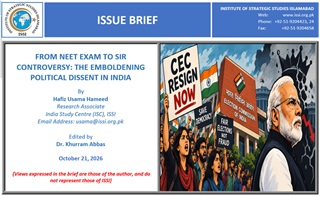
After the successful July protests over NEET exam irregularities, India’s capital New Delhi is in news for a fresh wave of protests. Students, political workers, civil society activists and common Indian citizens are demanding resignation of the country’s Chief Election Commissioner Gyanesh Kumar and an inquiry into the alleged partisan role of his office. Like the Cockroach Janta Party (CJP)-led movement of July 2026, the government authorities are using coercive means such as detentions, mass arrests, barricading popular protest sites, baton charge, and tear gas to dispel the protestors. This has yielded little results so far as the protests are growing; agitation is expanding across the country; and the opposition parties are gaining further strength to question the electoral transparency and challenge the Modi government more confidently.[1]
The recent agitation is one of the most testing challenges the Modi government has faced since grabbing power in 2014. Whatever the outcomes, the movement is going to cast lasting impacts on the Indian democracy and politics.