









Introduction
Pakistan’s dependence on imported fuel exposes its energy system and foreign-exchange position to external shocks. State Bank of Pakistan (SBP) data show petroleum-group import payments of about $1.55 billion in June 2026, including $812.03 million for crude oil, $506.86 million for petroleum products and $221.47 million for liquefied natural gas (LNG).[1] Pakistan Bureau of Statistics (PBS) data place the FY2025–26 petroleum-group import bill at $16.86 billion, up 5.76 percent. Crude imports rose 31.58 percent to $7.17 billion and petroleum products 7.05 percent to $6.39 billion, while LNG fell 36.10 percent to $2.22 billion.[2]
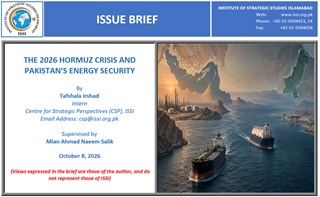
Strait of Hormuz is a critical route for Gulf energy exports. In the first half of 2025, it carried 20.9 million barrels of oil daily, around one-quarter of global seaborne oil trade, and over 20 percent of global LNG trade, largely from Qatar.[3] Qatar’s LNG exports have no practical maritime alternative, whereas Saudi Arabia can divert some crude through its East-West pipeline to Yanbu. Pakistan’s exposure therefore combines supplier concentration with dependence on vulnerable shipping routes.