








Introduction
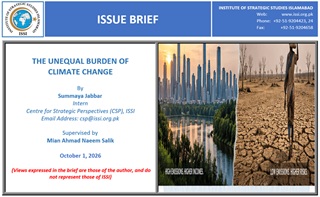
Climate change is already reshaping livelihoods, public finances and development choices across the world. Floods, droughts, heatwaves, wildfires and glacier loss affect every region, but their consequences are not evenly distributed. Countries with stronger institutions, deeper insurance markets and greater fiscal space are generally better placed to absorb shocks. Many developing countries, by contrast, enter climate emergencies with weaker infrastructure, high debt burdens and a heavy dependence on climate-sensitive sectors such as agriculture.
This imbalance sits at the centre of the climate-justice debate. The distinction between the Global North and Global South is not a formal legal category under the UN climate regime, but it captures an important political reality: the countries that industrialised earliest generated a large share of the carbon dioxide that accumulated in the atmosphere, while many lower-emitting states now face severe adaptation and recovery costs. At the same time, the distribution of responsibility is no longer static. China and other emerging economies have become major emitters, which means historical responsibility, present-day mitigation obligations and climate vulnerability cannot be reduced to a single North–South divide.