





Press Release
Seminar on “Deep Seabed Mining and the BBNJ Agreement: Opportunities, Governance and Strategic Priorities for Pakistan”
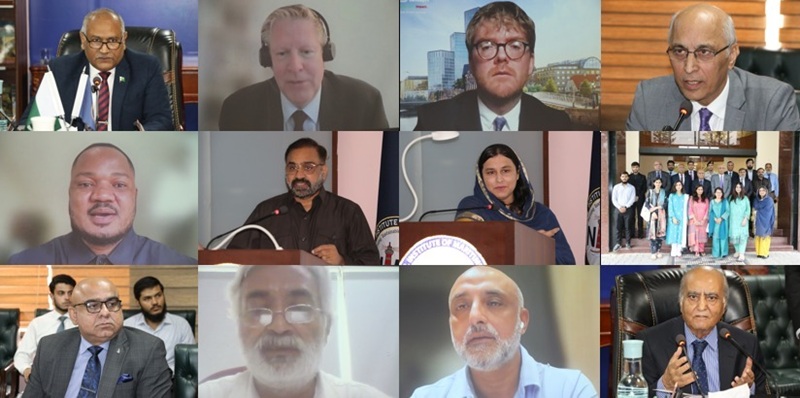
Islamabad, 20 August 2026: NIMA in collaboration with Institute of Strategic Studies Islamabad (ISSI), organized sixth and concluding joint seminar of Blue Economy seminar series on “Deep Seabed Mining and the BBNJ Agreement: Opportunities, Governance and Strategic Priorities for Pakistan”.
The seminar brought together policymakers, academics, maritime practitioners, scientists and strategic experts to discuss developments in Deep Seabed Mining (DSM) and the BBNJ Agreement, with a focus on their legal, environmental, economic and strategic implications for Pakistan.
International experts, including Mr. Fredrik Haag (IMO), Dr. Rian Derrig (World Maritime University) and Mr. David Willima (DSCC) discussed global ocean governance, developments in the International Seabed Authority, Mining Code, and the relationship between DSM and marine biodiversity conservation.
Pakistani speakers included Dr. Fasiha Safdar (NIMA), Mr. Khalid Mehmood (NIO), Dr. Kanwar Javaid (FAO) and Mr. Jehanzeb Sikander.
In his concluding remarks, Amb. Moin ul Haque, DG ISSI stressed sustained policy dialogue, informed decision-making and stronger inter-institutional coordination. Ambassador Khalid Mahmood, Chairman, Board of Governors, ISSI, delivered the vote of thanks.
Key Recommendations Emerging from the Seminar are:
- Pakistan must establish the exact potential for DSM in its EEZ and extended continental shelf through survey/research with possible involvement of external SMEs/Investors etc with due regard to environmental sensitivities and national interest.
- Pakistan needs stronger inter-institutional coordination and regulatory preparedness to develop a coherent national approach to Deep Seabed Mining, the BBNJ Agreement and emerging ocean governance frameworks. Thinktanks like NIMA and ISSI can play a critical role in developing such consensus.
- Pakistan must invest in marine scientific research, technology and human capacity, while pursuing international partnerships for technology transfer and knowledge exchange.
- Pakistan needs a coherent national policy for Deep Seabed Mining that balances economic opportunities with environmental sustainability, biodiversity conservation and national strategic interests.
- Pakistan must strengthen its engagement in international ocean governance to protect its interests and ensure that it does not miss future negotiating opportunities or the benefits of capacity building and technology transfer under emerging international frameworks.
- Pakistan must proactively examine opportunities for reserving an area for Deep Seabed Mining in Area Beyond National Jurisdiction for subsequent exploration.
The seminar concluded the NIMA-ISSI Blue Economy series, reaffirming the importance of a science-based, sustainable and strategically informed approach to Pakistan’s maritime future and its role in global ocean governance.