









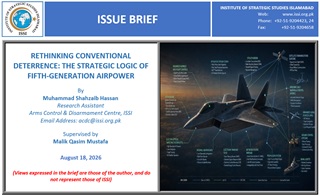
In the opening weeks of its invasion of Ukraine, the Russian Aerospace Forces, one of the world’s largest air arms, failed to secure control of the skies it was attacking. With a huge superiority in aircraft numbers and surface-to-air missiles (SAM), Russian aircraft were unable to neutralize Ukrainian ground-based air defenses and were restricted to low-level and standoff operations within a few weeks.[1] It challenged a long-standing doctrine in airpower thinking that was widely accepted: that superior forces and technology inevitably meant control of the air.
The staple methods of conventional deterrence, however, have been based on force size, technological advantage, and the capability to create (or fail to create) air superiority. That’s no more the case in modern battlefields. Instead, the operation of militaries in the air has now been transformed by integrated air defense, advanced sensors, electronic warfare, networked command, and long-range precision weapons. The “big question” is, then, who can keep functioning once their airspace is challenged. Fifth-generation airpower has emerged as one answer to that shift.